When It Comes to Stroke, Every Minute Counts — And This Article Could Save Someone You Love
Picture this: you’re sitting at the dinner table with your mum, dad, or partner. They reach for their glass and miss it. Their hand drops. One side of their face looks somehow… different. They try to say something and the words come out wrong.
Your stomach drops.
You don’t know what’s happening, and you don’t know what to do.
That moment — the gap between noticing something is wrong and actually doing something about it — is where strokes change lives forever.
Stroke doesn’t wait. Every minute that ticks by without treatment costs the brain dearly. And yet most people still don’t recognise stroke symptoms early enough.
Whether you’re at home, at work, or out with family in Bagalkot, knowing what to look for — and acting immediately — can mean the difference between recovery and lifelong disability. That’s why awareness and access to trusted Hospitals in Bagalkot are so important during a stroke emergency.
By the end of this article, you’ll know the warning signs, the science behind stroke, and exactly what to do if someone around you experiences one.
What Is a Stroke, Really? Understanding the Basics Before It’s Too Late
Most people have heard the word stroke, but few truly understand what it means medically.
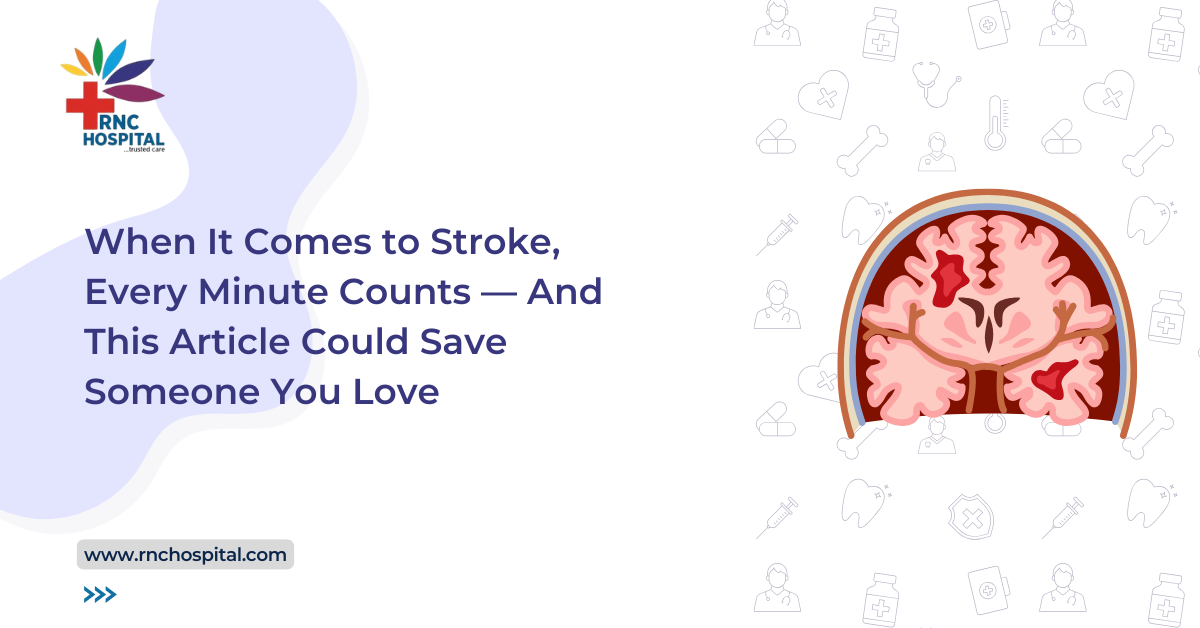
A stroke occurs when blood flow to part of the brain is suddenly interrupted. Without oxygen and nutrients carried by the blood, brain cells begin to die within minutes.
Although the brain represents only about 2% of body weight, it consumes nearly 20% of the body’s oxygen and glucose. That means it cannot survive without continuous blood supply.
Here’s a number that puts things into perspective:
Nearly 1.9 million brain cells die every single minute during a stroke.
That damage cannot be reversed once it happens. This is why stroke is treated as a medical emergency similar to a heart attack.
If someone in Bagalkot experiences stroke symptoms, immediate medical care at one of the well-equipped Hospitals in Bagalkot can significantly improve the chances of recovery.
The Two Main Types of Stroke — Because They’re Not the Same Thing
Not all strokes are the same. Understanding the two main types helps explain why immediate hospital care is critical.
Ischemic Stroke
This is the most common type, accounting for about 85% of all strokes.
It occurs when a blood clot blocks an artery supplying blood to the brain. The blockage prevents oxygen from reaching brain tissue, causing cells to die rapidly.
In many cases, doctors can treat this type using clot-dissolving medications or specialized procedures — but only if the patient reaches the Best Hospital in Bagalkot quickly enough.
Hemorrhagic Stroke
This type happens when a blood vessel in the brain bursts.
Blood leaks into surrounding brain tissue, creating pressure that damages the brain. Hemorrhagic strokes are less common but often more severe.
Patients may experience:
- Sudden severe headache
- Vomiting
- Loss of consciousness
- Rapid neurological deterioration
The treatments for hemorrhagic stroke are completely different from ischemic stroke, which is why diagnosis at a hospital with proper imaging facilities in Bagalkot is essential.
Know the Signs: What a Stroke Actually Looks Like in Real Life
Stroke symptoms can appear suddenly and may be subtle enough to ignore.
Doctors worldwide recommend remembering the FAST rule.
F – Face
Ask the person to smile.
Does one side of the face droop?
A – Arms
Ask them to raise both arms.
Does one arm drift downward?
S – Speech
Is the speech slurred or difficult to understand?
Ask them to repeat a simple sentence.
T – Time
If you notice any of these signs, time is critical. Immediate medical attention at the nearest Hospital in Bagalkot can save brain function and even the person’s life.
Other Stroke Warning Signs You Should Never Ignore
FAST is the most common recognition tool, but strokes can also cause:
- Sudden loss of balance or coordination
- Trouble seeing in one or both eyes
- Severe unexplained headache
- Confusion or difficulty understanding speech
- Sudden numbness on one side of the body
Sometimes these symptoms disappear quickly. This could be a Transient Ischemic Attack (TIA) or mini-stroke.
Even if symptoms resolve, the person must still visit a Best Hospital in Bagalkot immediately, because TIAs are often warning signs of a larger stroke that may follow.
Time Is Brain: Why Every Minute Matters
Neurologists often use the phrase:
“Time is brain.”
During an untreated stroke:
- 1.9 million neurons die per minute
- 14 billion neural connections are lost
- Brain aging accelerates dramatically
This is why stroke treatment is extremely time-sensitive.
In many cases, clot-dissolving medication must be given within 4.5 hours of symptom onset.
The faster someone reaches one of the trusted Hospitals in Bagalkot, the greater their chances of avoiding permanent disability.
What to Do If You Suspect a Stroke
If you think someone is having a stroke, act immediately.
Follow these steps
- Call emergency services immediately.
- Note the exact time symptoms started.
- Keep the person calm and seated.
- Do not give food, water, or medication.
- Wait for trained medical help.
Prompt medical attention at a Best Hospital in Bagalkot ensures that stroke specialists can quickly determine the type of stroke and begin life-saving treatment.
Diagnosis and Treatment at the Hospital
When a stroke patient arrives at a hospital, doctors act immediately.
Tests may include:
- CT scan
- MRI scan
- Blood tests
- Neurological assessments
These help determine the type and severity of the stroke.
Treatment options may include
- Clot-dissolving medication (tPA)
- Mechanical thrombectomy (clot removal)
- Surgery for bleeding strokes
- Intensive neurological care
After the emergency phase, patients may require rehabilitation and Paralysis Treatment in Bagalkot, depending on the extent of brain injury.
The Real Cost of Delayed Treatment
Stroke is one of the leading causes of long-term disability worldwide.
When treatment is delayed, patients may suffer:
- Paralysis on one side of the body
- Loss of speech
- Memory impairment
- Difficulty swallowing
- Emotional changes
Early intervention at the Best Hospital in Bagalkot can dramatically reduce these complications and improve recovery outcomes.
Can Stroke Be Prevented?
The encouraging news is that many strokes are preventable.
Major risk factors include:
- High blood pressure
- Smoking
- Diabetes
- High cholesterol
- Obesity
- Lack of physical activity
- Heart rhythm disorders
Managing these conditions significantly lowers the risk of stroke.
Regular health checkups and preventive care offered by Hospitals in Bagalkot play an important role in identifying risks early.
Recovery After a Stroke
Stroke recovery varies from person to person.
Many patients regain significant function with proper rehabilitation, which may include:
- Physiotherapy
- Speech therapy
- Occupational therapy
- Psychological support
Patients with severe movement difficulties may require specialized Paralysis Treatment in Bagalkot to regain mobility and independence.
Rehabilitation works by encouraging the brain to create new neural pathways — a process known as neuroplasticity.
Why Stroke Awareness Matters
Stroke awareness campaigns exist because many people still cannot recognise stroke symptoms.
Learning the warning signs and sharing them with family members can save lives.
If someone in Bagalkot experiences stroke symptoms, immediate care at one of the trusted Hospitals in Bagalkot could be the decision that saves their brain function, independence, and future.
The Most Important Things to Remember
- A stroke happens when blood flow to the brain stops.
- Nearly 1.9 million brain cells die every minute during a stroke.
- Recognise the FAST symptoms: Face drooping, Arm weakness, Speech difficulty, Time to act.
- Immediate treatment at a Best Hospital in Bagalkot improves survival and recovery.
- Mini-strokes are warning signs that should never be ignored.
- High blood pressure is the biggest controllable risk factor.
- Recovery often requires rehabilitation and Paralysis Treatment in Bagalkot.
- Stroke awareness saves lives.